Buying your first home in Palm Bay can feel exciting one minute and overwhelming the next. With a city this large, a wide range of home styles, and real monthly costs that go far beyond the list price, it is easy to wonder where to begin. The good news is that a smart first step can simplify everything that follows. Here is how to get started with clarity, confidence, and a plan that fits your budget.
Start With Your Monthly Budget
If you are buying for the first time, it helps to think beyond the down payment. Your monthly housing cost may include principal and interest, property taxes, homeowners insurance, flood insurance, utilities, maintenance, and possibly HOA fees.
That matters in Palm Bay because the city offers everything from single-family homes and condos to townhomes, apartments, and gated subdivisions. Two homes with similar list prices can lead to very different monthly costs once insurance, dues, and upkeep are added in.
Palm Bay’s recent housing data gives useful context. The owner-occupied rate is 79.7%, the median value of owner-occupied homes is $283,200, median monthly owner costs with a mortgage are $1,549, and median gross rent is $1,601.
For many first-time buyers, that comparison is a reminder to look at the full payment, not just the purchase price. If you are already paying rent near that level, ownership may be worth exploring, but only after you build a realistic monthly budget.
What To Include In Your Budget
Before you start touring homes, make sure your budget accounts for:
- Down payment
- Closing costs
- Monthly mortgage payment
- Property taxes
- Homeowners insurance
- Flood insurance if needed
- HOA dues if applicable
- Utilities
- Routine maintenance and repairs
- Moving costs and utility setup
- Emergency savings after closing
A strong plan also leaves room for the unexpected. Keeping cash set aside after closing can help you handle early repairs, moving expenses, and the normal surprises that come with homeownership.
Know Your Down Payment Options
A lot of first-time buyers assume they need 20% down. In reality, many buyers may qualify with far less.
Current guidance shows that many buyers need at least 3% down, while FHA loans can go as low as 3.5%. That can make homeownership feel more reachable, but it does not mean you should stretch your budget just because you can.
The better move is to match your loan option to your comfort level, cash reserves, and monthly payment goals. A lower down payment may help you buy sooner, but you still want enough money left for closing costs, insurance, and day-one expenses.
Get Preapproved Before You Shop
Preapproval is one of the most important early steps for first-time buyers. It helps you understand what a lender may approve, what your payment range looks like, and how competitive you can be when you make an offer.
It also helps you avoid falling in love with a home that does not fit your financing. In a market as broad as Palm Bay, preapproval keeps your search focused and saves time.
A smart approach is to compare at least three preapprovals from different lenders. Terms can vary, and shopping lenders early may help you spot better rates, lower fees, or loan options that fit your situation more clearly.
If Your Credit Needs Work
If your credit is not where you want it to be, do not panic. Some buyers may need time to improve their credit profile before applying, and FHA financing can be a lower-credit-score option for some borrowers.
The key is to know where you stand before you start making plans around a purchase. It is also wise to avoid taking on new debt before applying, since that can affect your approval and monthly affordability.
Check Local Assistance Early
Palm Bay and Brevard County both publish purchase-assistance resources, and Florida Housing also offers programs for eligible buyers. These options can be helpful, but they each have different rules, contribution requirements, education steps, and funding availability.
That is why it is important to verify program details early instead of building your whole plan around assistance that may not be available when you are ready to buy.
Palm Bay Assistance
Palm Bay describes a purchase-assistance strategy for buyers who have not owned a home in the prior three years. The city says income is capped at 80% of area median income, buyers must complete a homebuyer class, obtain lender credit qualification, and contribute $1,000.
The city also states the assistance is structured as a 0% loan for 10 years and is forgiven at the end of the term. However, the city’s page also says the SHIP waitlist is currently closed, so availability should always be confirmed.
Brevard County Assistance
Brevard County’s Purchase Assistance Program is designed for very low-, low-, and moderate-income families. The county says it allows new or existing homes, excludes manufactured homes, and requires first-time-buyer status, meaning no homeownership in the last three years.
The county also requires a 5-hour homebuyer education workshop. Assistance is offered as a deferred second mortgage at 0% interest, with minimum buyer contributions of $500 or $1,000 depending on income, and maximum assistance of $75,000 or $60,000 depending on income.
Florida Housing Programs
Florida Housing offers a Homebuyer Program with 30-year fixed-rate first mortgages through participating lenders. Borrowers need a minimum credit score of 640, approved homebuyer education, and must meet county income and purchase-price limits.
Eligible borrowers may also use down payment assistance with a Florida Housing first mortgage. Florida Housing says FL Assist can provide up to $10,000 on FHA, VA, USDA, and conventional loans, and the Hometown Heroes program serves eligible first-time, income-qualified workforce occupations.
Search Palm Bay By Submarket
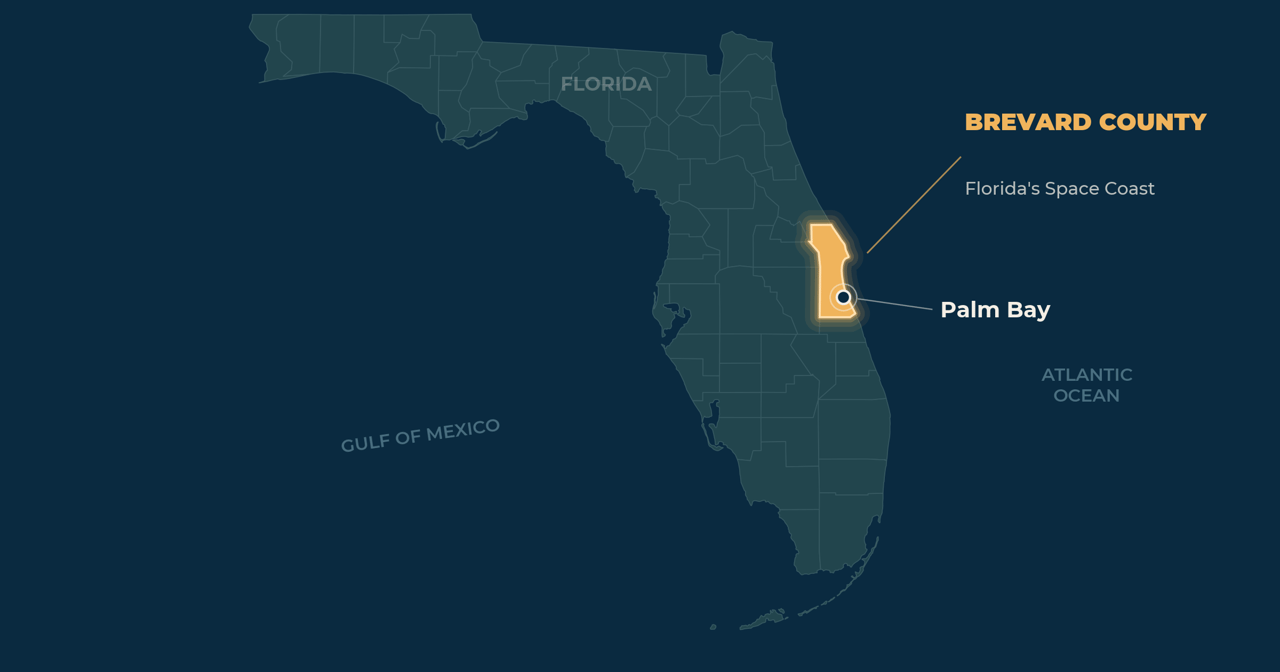
Palm Bay is not a one-size-fits-all market. It covers about 98 square miles, which means your search will go much better if you think in terms of submarkets and daily lifestyle rather than just typing in the city name.
The city includes a broad mix of housing types and settings. Some buyers may focus on newer construction pockets, while others may prefer established resale areas, condos, or townhome options.
City materials also point to growth in places like Bayside Lakes and reference other distinct areas such as the southwest Compound area. That is a good reminder that you are often comparing very different parts of Palm Bay, even when homes share the same city address.
Filters That Matter More Than Price Alone
When narrowing your options, focus on factors that affect both your budget and your day-to-day life:
- Commute time
- Flood-zone location
- HOA dues
- Age and condition of major systems
- Road access
- Nearby parks and recreation
- Access to services and amenities
Palm Bay’s city site notes 29 city parks and proximity to Melbourne, Orlando International Airport, and Port Canaveral. Depending on your routine, location inside the city can shape how convenient homeownership feels after move-in.
Check Flood Zones Up Front
In Palm Bay, flood-zone review should happen early, not after you find the perfect home. The city provides a FEMA flood zone map, which makes it easier to check a property’s location before you get too deep into the process.
This matters because flood exposure can affect both insurance costs and your monthly payment. If you skip this step until later, a home that looked affordable on paper may suddenly feel very different once insurance is added.
A simple early flood check can save time, protect your budget, and help you compare homes more accurately.
Decide Between New Construction And Resale
Palm Bay offers both new-construction opportunities and resale homes, so first-time buyers often need to decide which path fits them best. Neither option is automatically better. It depends on your timeline, budget, and comfort with condition, warranties, and upfront costs.
New construction can be appealing if you want a more modern layout or newer systems. Resale homes may offer different locations, lot sizes, or pricing depending on the area.
What To Ask On New Construction
If you are considering a new-construction home, ask clear questions about:
- Builder deposits or earnest money
- Whether deposits are refundable
- Upgrade costs
- Estimated completion timeline
- HOA fees and community costs
It is also important to remember that you are not required to use the builder’s affiliated lender. Comparing financing options can help you make a more informed decision.
What To Protect In Resale
If you are buying a resale home, your offer should protect you appropriately. A financing contingency and a satisfactory inspection contingency can help you avoid being locked into a purchase if the loan falls through or the inspection reveals serious issues.
That kind of protection matters even more when you are buying for the first time. A home may look great during a showing, but condition, systems, and repair needs become much clearer once inspections begin.
Build A Simple First-Time Buyer Plan
If you want to avoid overwhelm, break the process into a few clear steps. You do not need to know everything on day one. You just need a roadmap.
A simple Palm Bay first-time buyer plan looks like this:
- Review your spending and set a monthly payment target.
- Estimate your cash needed for down payment, closing costs, moving, and reserves.
- Check your credit and avoid taking on new debt.
- Compare at least three lenders for preapproval.
- Review local and state assistance options early.
- Narrow Palm Bay by submarket, commute, flood zone, and total monthly cost.
- Decide whether new construction or resale fits you best.
- Tour homes with a clear budget and a focused list of must-haves.
This approach keeps emotion from taking over too early. It also helps you move faster and more confidently once the right home appears.
Why Guidance Matters In Palm Bay
First-time buyers in Palm Bay are not just choosing a house. You are choosing a payment, a location, a property type, and a set of long-term costs.
Because the city is large and varied, small details can make a big difference. A well-organized plan can help you compare homes more accurately, ask better questions, and avoid surprises around insurance, HOA fees, property type rules, or assistance eligibility.
If you want a guided, local approach to buying your first home in Palm Bay, Donell Knight II can help you build a smart plan, narrow the search, and move forward with confidence.
FAQs
What should first-time buyers budget for in Palm Bay?
- You should budget for more than the down payment, including your mortgage, property taxes, homeowners insurance, possible flood insurance, HOA dues, utilities, maintenance, moving costs, and cash reserves.
Do first-time buyers need 20% down in Palm Bay?
- No. Many buyers may qualify with as little as 3% down, and FHA loans can go as low as 3.5%, depending on loan eligibility.
Should first-time buyers get preapproved before touring Palm Bay homes?
- Yes. Preapproval helps you understand your price range, strengthens your position when making an offer, and helps keep your search focused.
Are there first-time buyer assistance programs in Palm Bay or Brevard County?
- Yes. Palm Bay, Brevard County, and Florida Housing each publish programs or resources, but eligibility rules, property rules, buyer contributions, and funding availability can differ.
Why should Palm Bay buyers check flood zones early?
- Flood-zone location can affect insurance costs and your total monthly payment, and Palm Bay provides a FEMA flood zone map so buyers can check an address early.
How should first-time buyers narrow neighborhoods in Palm Bay?
- A practical approach is to compare submarkets based on commute, flood exposure, HOA dues, road access, age of systems, and nearby amenities instead of focusing only on list price.