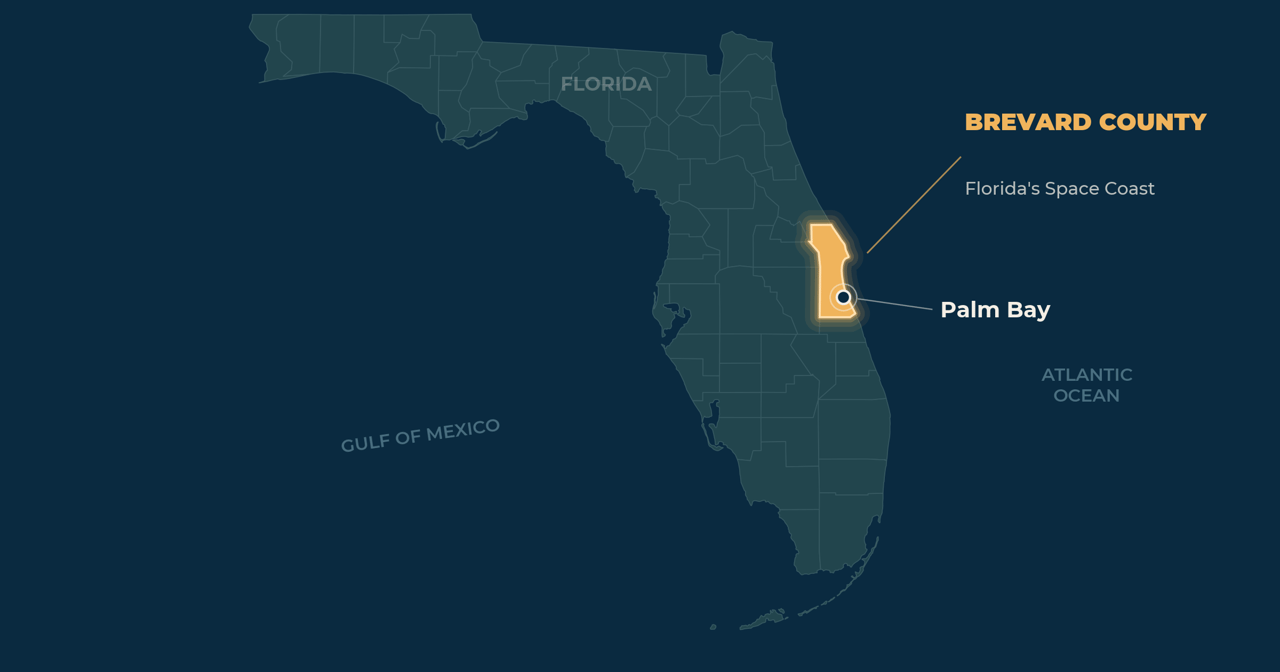
The First-Time Buyer's Complete FHA Playbook for Palm Bay and Brevard County
A note before we start: this is a general education piece from a local agent, not legal, tax, or lending advice. Loan rules, rates, tax figures, and limits change. Everything here was accurate as of the publish date, but always confirm current numbers with your lender and the county before you write an offer.
Real quick: is this guide for you?
Let me save you some time up front.
This post is for buyers who do not qualify for a VA loan. If you served, or you're an eligible spouse, close this tab and go read my VA guide instead. A VA loan almost always beats FHA for people who can get one. Zero down, no monthly mortgage insurance, and usually the lowest total cost of any loan out there. If that's you, FHA is the wrong tool.
Still here? Good. You're probably a first-time buyer with a normal job, some savings, decent-but-not-perfect credit, and a plan to put down roots on the Space Coast. FHA was built for you. I've walked a lot of Palm Bay and Melbourne buyers through this exact path, and I'm going to lay out the whole thing start to finish. What FHA is, why it works, the real math, how you qualify, and every step from your first showing to the day you get keys.
Grab a coffee. This one's thorough on purpose.
Why FHA is the go-to for most first-time buyers
FHA stands for Federal Housing Administration. The government doesn't lend you the money. It insures the loan, which lowers the risk for the bank, and that lower risk gets passed to you in two ways that matter.
One: the rate is usually a little lower than conventional. Because the loan is government-backed, lenders can offer FHA rates that run roughly 0.125% to 0.50% below a comparable conventional rate, depending on your credit and the market (source: general lender pricing data, 2026). It doesn't sound like much. On a $340,000 loan it can be $30 to $90 a month, every month, for as long as you own the home.
Two: the down payment is tiny. 3.5% down with a 580 credit score. That's the headline feature and it's a big deal when you're trying to get in the door.
Now the part nobody explains well: mortgage insurance. Both FHA and low-down conventional loans charge it. They just charge it differently, and the difference is worth understanding before you pick a lane.
On a conventional loan with less than 20% down, you pay PMI (private mortgage insurance). PMI is priced on a sliding scale. The lower your credit score, the more you pay, and it can swing from cheap to painful. The upside is PMI falls off automatically once you hit 20% equity. You stop paying it.
On an FHA loan you pay MIP (mortgage insurance premium). MIP is a flat, predictable structure. Everyone with the same loan pays basically the same rate, whether your score is 585 or 720. The catch is that with the minimum down payment, MIP sticks around for the life of the loan unless you refinance out of it later.
Here's the plain-English version. If your credit is strong, conventional PMI can be cheaper and it disappears sooner. If your credit is bruised, FHA is often the better deal because your score doesn't jack up the insurance cost the way it does on conventional. Most first-time buyers I work with land on FHA, get in the home, build equity, and refinance into a conventional loan a few years later to drop the MIP entirely. That's a completely normal play.
The math that actually sells FHA
People fixate on mortgage insurance like it's a penalty. Let me show you why that's the wrong frame.
Let's use a real Palm Bay number. Say you buy a home for $350,000 with the minimum 3.5% down.
- Down payment: $12,250
- Base loan: $337,750
- Upfront MIP (1.75%, rolled into the loan): about $5,911
- Financed loan amount: roughly $343,660
- Annual MIP (0.55% of the balance, paid monthly): about $157 a month, or roughly $1,870 a year
Add it up over five years. Your annual MIP runs about $9,300 over that stretch (it drops a little each year as you pay the balance down), plus the $5,911 upfront premium. Call the total FHA mortgage insurance cost over five years right around $15,200.
That number feels like a lot in a vacuum. So let's not leave it in a vacuum.
Now the other side of the ledger: appreciation. According to the Federal Housing Finance Agency House Price Index, U.S. home prices have risen about 4.3% per year on average over the long term (1975 to 2025). Florida has historically run hotter than the national average, though it's also more volatile, so I'm going to use the conservative national number so we're being honest, not salesy.
Run that same $350,000 home forward five years at 4.3% a year:
$350,000 grows to about $431,900. That's roughly $81,900 in appreciation.
So over five years you'd pay about $15,200 in mortgage insurance to capture about $81,900 in appreciation. The MIP is less than a fifth of what the home earned you. And that comparison doesn't even count the principal you paid down over those five years, which builds equity on top of the appreciation.
Even if you get pessimistic and assume only 3% appreciation, the home still gains around $55,700 over five years. MIP is still a fraction of that. The math holds up unless the market goes flat or negative for half a decade, which has been rare on the Space Coast.
Mortgage insurance isn't the cost of a bad deal. It's the toll you pay to stop renting and start owning the appreciation. That's the whole point.
(Appreciation is an average and a projection, not a promise. Past performance doesn't guarantee future results, and any given five-year window can run higher or lower.)
FHA qualifications, in real detail
This is the part where most guides get vague. I'm not going to.
Credit score: the truth about the 580 minimum
Yes, FHA technically allows a 580 score for 3.5% down (and 500 to 579 if you can put 10% down). But I want you to understand what a bare-minimum score actually costs you, because "you qualify" and "you qualify for a home you'd want" are two different things.
A couple things happen at 580.
First, most lenders add their own overlays. Even though FHA allows 580, a lot of lenders won't touch it below 620 or 640 in practice (source: HUD guidelines plus standard lender overlays, 2026). So a 580 might qualify on paper and still get you turned away at the branch.
Second, a low score means a higher rate, and a higher rate quietly shrinks your buying power. A higher rate makes your monthly payment bigger, which pushes your debt-to-income ratio up, which can knock down your preapproval amount or disqualify you entirely on DTI. Your score doesn't just affect your rate. It affects how much house you can buy.
So here's my honest advice. Target 620 at the absolute floor to clear most lender overlays. Aim for 680+ and the pricing starts getting noticeably better, and 740+ to get near the best FHA rates available. The jump in affordability between a 600 score and a 700 score can be tens of thousands of dollars in buying power. This is exactly the kind of thing I help buyers work on before we shop, because moving a score up two tiers can change which neighborhoods are even on the table. Sometimes the smartest move is to wait sixty days, pay down two credit cards, and buy a much better house.
Employment and income: two years, but flexible
FHA wants to see a two-year work history, but there's more nuance here than people expect (source: HUD Single Family Housing Policy Handbook 4000.1, 2026).
- You do not need two years with the same employer. Two years across different jobs in the same general field is fine.
- Gaps happen and they're workable. A gap of six months or more usually means you need to be back at your current job for at least six months, with two years of steady work before the gap, plus a short letter of explanation. Shorter gaps are usually cleared with a quick note.
- School counts. If you were in college or a training program within the last two years and you're now working in a related field, that time in school can count toward your two-year history. You'd provide a transcript or diploma. This is huge for recent grads who think they can't buy yet.
- Military service counts the same way toward the two-year requirement.
- Just started a new job? You can often close on a job offer letter plus 30 days of pay stubs once you start. If you got a raise or promotion, your new pay rate generally needs to kick in within 60 days of closing.
- Self-employed? FHA wants to see about two years of self-employment, backed by two years of personal and business tax returns, plus profit-and-loss statements. Underwriters use your net income after write-offs, which trips up a lot of business owners. If you write off aggressively to lower your taxes, you may show less qualifying income than you think. Worth a conversation early.
The documents to start gathering now
Get ahead of this and your file moves fast. Pull together:
- Two years of W-2s (and two years of tax returns, especially if self-employed or you have side income)
- Your two most recent pay stubs (30 days' worth)
- Two to three months of bank statements, all pages, even the "intentionally blank" ones
- Photo ID and Social Security number for the credit pull
- Explanations for anything unusual: a recent large deposit, a job gap, a past collection
If you have gift money coming from family, tell your lender up front so they can paper it correctly. More on gifts in a second.
Debt-to-income (DTI): how the ratio really works
DTI is the gate most first-time buyers underestimate, so let's be precise.
There are two ratios. Front-end is just your future housing payment (principal, interest, property taxes, homeowners insurance, MIP, and any HOA dues) divided by your gross monthly income. Back-end adds everything else with a minimum monthly payment: car loans, student loans, credit card minimums, personal loans.
FHA's stated benchmarks are 31% front-end and 43% back-end (source: HUD Handbook 4000.1, 2026). But the automated underwriting system, FHA's TOTAL Scorecard, routinely approves higher when your file is strong. With a 620+ score and solid compensating factors like cash reserves, buyers regularly get approved up to roughly 46.9% front-end and 56.9% back-end. Below a 620 score, expect the tighter 31/43 to hold.
Two things people always get wrong about DTI:
- Underwriters use the minimum payment showing on your credit report, not your total balance. A $9,000 card with a $180 minimum counts as $180, not $9,000.
- It's calculated on gross income, before taxes. Not what hits your bank account.
The practical takeaway: paying off or paying down a car loan or a credit card right before you buy can meaningfully increase how much home you qualify for. Sometimes wiping out one $400 car payment does more for your buying power than a 20-point credit bump. We look at this together before you shop.
Gift funds and co-borrowers (a first-timer's best friends)
FHA is genuinely generous here.
Gift funds: Your entire down payment and closing costs can come from a gift. It can come from family, an employer, a charity, or a government program (source: HUD, 2026). It has to be a true gift with no repayment expected, documented with a gift letter, and it can't come from a loan like a credit card cash advance. If mom and dad want to help, they absolutely can, all the way to 100% of your cash to close.
Non-occupant co-borrower: If your income alone doesn't stretch far enough, a parent or close relative can co-sign as a non-occupant co-borrower without living in the home, and you keep the 3.5% down payment as long as they're a family member. Their income helps your DTI. Just know their debts count against the ratio too, and they're fully on the hook for the loan. If the co-borrower isn't a relative, FHA requires a much larger down payment, so keep it in the family.
Down payment breakdowns
The 3.5% headline is easy to picture once you see real numbers. Here's what the down payment looks like across three common Palm Bay price points:
Purchase price | 3.5% down payment |
|---|---|
$250,000 | $8,750 |
$350,000 | $12,250 |
$450,000 | $15,750 |
That's just the down payment. You'll also have closing costs on top (next section), though we often get the seller to cover a big chunk of those.
A word on down payment assistance (DPA)
Florida and various programs offer down payment assistance that stacks with FHA, and it can be the bridge that gets someone into a home a year sooner. I can point you to the current programs as a separate resource, but I want you to walk in with eyes open on the tradeoffs:
- DPA means you're financing more, so your monthly payment goes up. You're borrowing the down payment instead of bringing it.
- Most DPA programs don't offer a preferential interest rate. Some come with a slightly higher rate.
- Some DPA products don't allow a rate buydown, so you lose that lever.
None of that makes DPA bad. For the right buyer it's the difference between owning and waiting. It just isn't free money, and I'd rather you know the mechanics than get surprised at the closing table.
Closing costs (and how I get the seller to pay them)
Closing costs are the fees on top of your down payment to actually get the loan done and the deed recorded. In Florida they break down into a few buckets:
- Lender costs: origination or underwriting fees, credit report, etc.
- Title: owner's title insurance, lender's title insurance, settlement/closing fee
- Appraisal: roughly $500 to $700
- Survey: roughly $400 to $600
- Doc stamps and intangible tax (Florida's transfer taxes, explained below)
- Prepaids and escrows: upfront property taxes and homeowners insurance the lender collects to seed your escrow account
On the Florida taxes specifically (these are set by state law, not the county, and haven't changed for 2026, per the Florida Department of Revenue):
- Doc stamps on the deed: $0.70 per $100 of the sale price. In every county except Miami-Dade, and here in Brevard, the seller customarily pays this one.
- Doc stamps on the note: $0.35 per $100 of the loan amount. The buyer pays this.
- Intangible tax: 0.2% of the loan amount (0.002). The buyer pays this too.
The prepaids and escrows are usually the biggest and most variable chunk, and in Florida the wildcard is insurance. More on that later, but budget generously.
Seller-paid closing costs: the tradeoff nobody explains
Here's a move I love for my buyers. Instead of you bringing all that cash to the table, we negotiate for the seller to pay some or all of your closing costs. It's a legitimate, common strategy, and it can keep thousands of dollars in your pocket at closing.
But it's not magic, and I'll always tell you the tradeoff straight. Seller-paid closing costs come off the seller's net proceeds. They feel it dollar for dollar. So when we ask for a credit, the seller gets less flexible on price. The way we usually make it work is by structuring the offer at full price, or slightly over, so the seller nets what they wanted while still funding your credit. You finance a hair more, you bring a lot less cash. For a first-time buyer short on savings, that trade is often exactly right. We'll run your specific numbers both ways so you can see it.
Concession limits by loan type
There's a ceiling on how much a seller can contribute, and it depends on the loan (source: HUD and Fannie Mae/Freddie Mac guidelines, 2026):
Loan type | Max seller concession |
|---|---|
FHA (any down payment) | 6% |
Conventional, less than 10% down | 3% |
Conventional, 10% to 24.99% down | 6% |
Conventional, 25%+ down | 9% |
VA | 4% (plus the seller can pay normal closing costs on top) |
Notice FHA's flat 6% is more generous than conventional's 3% for a low-down buyer. That's another quiet reason FHA works so well for first-timers. Two caveats: the concession can't exceed your actual closing costs (you can't pocket the difference), and it can't be used for your down payment.
Ballpark closing cost ranges in Palm Bay
Every deal is different, but for planning, here's a realistic range for buyer closing costs plus prepaids and escrows (not counting your down payment):
Purchase price | Estimated buyer closing costs + prepaids |
|---|---|
$250,000 | ~$8,000 to $12,000 |
$350,000 | ~$10,000 to $15,000 |
$450,000 | ~$12,000 to $18,000 |
The insurance escrow is the biggest swing factor in those ranges. And remember, if we structure seller-paid costs well, a good chunk of this can come off your out-of-pocket number.
How I run the buying process here in Brevard
Preapproval first. Always. We don't tour homes until you have a real preapproval from a lender, because a preapproval tells us your exact price range, your monthly payment, and your cash to close. It also makes your offer credible when we write it. A pretty house you can't actually finance is just a field trip.
Once you're preapproved, here's the flow:
- We set up a custom home search. You'll get listings that fit your criteria as they hit the market. When you're touring, I ask you to pick 3 to 5 homes per day. We can absolutely see more, but past five they start to blur together and you stop remembering which kitchen was which. Three to five keeps it sharp so you can actually compare.
- You find one you love, and I go to work behind the scenes. I pull everything I can find: seller's disclosures, tax records, permit history, prior sales, flood zone, HOA docs if any. I want us walking into the offer knowing the property, not guessing.
- We write the offer. In Florida that's the FAR/BAR "As Is" Residential Contract, submitted with your preapproval letter and your signed documents. A clean, complete offer package tells the seller you're serious and ready.
- The seller responds, usually in 1 to 3 days. They'll accept, counter, or reject.
Here's how I coach you through each response:
- Accept: Congrats, we're under contract. The clock starts on your inspection period and your earnest money is due (more below). We move.
- Counter: This is normal and it's a good sign. It means they want to make a deal. We don't react emotionally to a counter. We look at price, closing costs, and timing as a package, and we counter back with a strategy, not a knee-jerk. Most deals live in the counter phase.
- Reject (or no response): Sometimes it's the wrong house, sometimes the wrong price, sometimes another offer beat us. We don't take it personally and we don't chase. We regroup and go find the next one. There's always a next one.
Inspections
Once you're under contract, the inspection period is your window to really look under the hood.
The default inspection period in the FAR/BAR "As Is" contract is 15 calendar days, but it's negotiable, and I usually like to offer a shorter period. A tighter inspection window signals to the seller that you're a serious buyer who won't drag things out, and in a competitive situation that can be the edge that gets your offer picked. We just make sure it's short enough to be attractive but long enough to actually get the inspection done and reviewed. Fair warning: the contract counts calendar days, weekends included, so we schedule your inspection in the first day or two, not on day 12.
I'll recommend inspectors I've had great experiences with, and most of my buyers use them. But you are completely free to hire anyone you want, and I encourage you to do your own homework on whoever you pick. I can't warranty a third party's work, so I want you comfortable with your inspector. A good inspection is a few hundred dollars that can save you thousands.
What happens when the inspection finds something (it will)
Let me set the expectation now so nothing feels like a crisis later: the inspection is going to find stuff. Every house has issues. A 2005 home in Palm Bay is going to have a list, and so will a brand-new build. That's not a red flag, it's just information. The question is never "are there problems," it's "what do we do about them."
And here's the key thing about how Florida works. Most deals here are written "As Is with right to inspect." The inspection is primarily for your knowledge and your decision. It does not automatically force the seller to fix anything or knock money off. If we want repairs or a credit, we have to go back and renegotiate. The leverage we have is your right to cancel during the inspection period and get your earnest money back, which is real leverage, but it's a negotiation, not an automatic entitlement.
When something meaningful comes up, we've got three main moves:
Option 1: Closing cost credit to offset the repairs. The seller gives you a credit at closing so you can handle the repairs yourself after you own the home. Clean and simple. The one catch: if we already maxed out the seller concessions to cover your closing costs up front, we can't just stack more on top of the 6% ceiling. We'd have to rework the structure. That's why I think about concessions and possible repairs together from the very beginning.
Option 2: Seller completes the repairs before closing. The seller fixes the items ahead of the closing date. If we go this route, I insist on a re-inspection about 3 days before closing to verify the work is actually done and done right. Here's why that matters: agents are not attorneys, and we can't write ironclad, enforceable repair language that guarantees quality. A re-inspection is how we protect you and confirm the work instead of taking someone's word for it.
Option 3: Cancel the contract. The nuclear option. If the issues are severe and we can't reach a deal, you exercise your right to walk during the inspection period and get your deposit back. I rarely need this, because there's almost always a middle ground that works for both sides. But it's your safety valve and it's real.
One more tool in my back pocket: I've got vendor relationships all over the Space Coast. Roofers, handymen, plumbers, electricians, people I trust. In a lot of cases they can do the needed work and get paid at closing out of the proceeds, which opens up solutions that would otherwise stall a deal. That flexibility solves most inspection headaches without anyone having to come up with cash mid-transaction.
Appraisal
The appraisal is an independent, licensed opinion of the home's value. The lender requires it because they're not going to lend you $340,000 on a house that's only worth $310,000. It protects them, and it protects you from overpaying.
Here's a piece of how I run deals that saves my buyers money: we don't order the appraisal or the survey until we're through the inspection and any repair negotiations are resolved. The appraisal costs real money out of your pocket, and it's non-refundable. If a deal is going to fall apart over inspection issues, I'd rather it fall apart before you've spent $600 on an appraisal for a house you're not buying. Inspection first, then we spend on the appraisal once we know the deal is solid. Small thing. Adds up.
Insurance (in Florida, this is a big one)
I'm going to be straight with you: homeowners insurance in Florida is expensive and it varies wildly from house to house. It is not an afterthought here, and it directly affects your monthly payment because it escrows in. Your monthly mortgage payment isn't just principal and interest. It's principal, interest, taxes, and insurance (the industry calls it PITI), plus your MIP. The insurance piece can swing your payment by a couple hundred dollars a month depending on the home.
That's exactly why shopping the quote matters so much. Either I or your lender will work with several insurance brokers to shop your policy and find the best number. This is one of the reasons a great local lender is gold. If you're working with my preferred lender, Ashley Stockrahm at Edge Home Loans, we lean on that network to get you competitive quotes fast instead of you calling around solo. Two nearly identical homes can have very different insurance costs, and shopping is how we find the good one.
A couple of Florida-specific inspections you'll hear about:
- The 4-point inspection looks at the four systems insurers care about most: roof, electrical, plumbing, and HVAC. Insurers typically require it on older homes (often 20+ years, though the threshold varies by carrier) before they'll write a policy. It determines whether you can even get insured.
- The wind mitigation inspection documents how well the home stands up to hurricane-force wind: roof shape, roof-to-wall connections, opening protection, and so on. It determines your discount. A strong wind mit report can meaningfully lower the windstorm portion of your premium. (Heads up: Florida rolled out an updated wind mitigation form as of April 1, 2026, so make sure your inspector uses the current one.)
Good news if you're buying new construction: you generally skip the 4-point entirely, because nothing is old. And while a wind mit isn't required either, a new home built to current Florida code usually earns strong wind credits automatically. That's one reason insurance on a newer build can come in cheaper than on an older home. Something to weigh when you're comparing a 2006 home against a 2025 one.
Survey
A survey is a professional map of the property. It shows the exact boundaries, where the home and any structures sit, easements, and whether anything encroaches over a line. The lender requires it to confirm the home is actually on its lot and nothing's crossing a boundary or sitting on an easement it shouldn't. It also protects you from inheriting a fence or shed dispute with a neighbor. Like the appraisal, I hold off on ordering this until we're clear of inspection so you're not spending on a deal that isn't finalized.
Underwriting, explained without the jargon
This is the part of the process buyers understand the least, so let me actually walk through it. Underwriting is the lender's deep-dive risk review. An underwriter (a real human, backed by software) verifies everything in your file and decides whether the bank can safely fund your loan.
They're evaluating what the industry calls the four Cs:
- Credit: your score and payment history. Do you pay your obligations on time?
- Capacity: your income and DTI. Can you actually afford this payment?
- Capital: your cash. Your down payment, your closing costs, and any reserves left over.
- Collateral: the home itself, confirmed by the appraisal. Is it worth the loan?
Most FHA files run first through automated underwriting (FHA's TOTAL Scorecard). If the file is clean, it gets an "Approve." If it's more complicated (thin credit, a gap, non-traditional income), it may go to manual underwriting, where a person reviews it by hand. Manual underwriting is stricter but very doable with the right lender.
The first real milestone is conditional approval. This means the underwriter is prepared to approve your loan as long as you satisfy a list of items called "conditions." This is normal. It is not a rejection. Almost every buyer gets conditional approval with a list of to-dos.
Common conditions that come back:
- A letter of explanation for a large or unusual deposit, or a recent credit inquiry
- An updated pay stub or a verification of employment (they often re-verify your job right before closing)
- Proof of where your down payment or gift funds came from (the "paper trail")
- A homeowners insurance binder showing coverage is in place
- Clarification on the appraisal or the title work
Once you clear every condition, the underwriter issues the magic words: "clear to close." That's final approval. The lender is ready to fund and we can schedule your closing.
Now, the single most important thing I can tell you about underwriting, and I mean this: do not rock the boat while you're in it. Underwriters can and do re-check your credit and employment right up until closing. So from the day you go under contract until the day you get keys:
- Don't open new credit. No new car, no new credit card, no "0% for 12 months" furniture financing. A single new account can change your DTI and blow up your approval.
- Don't change or quit your job, and don't switch from W-2 to 1099, if you can possibly avoid it. Stability is the whole game.
- Don't make large or unexplained deposits. Underwriters have to source every big deposit. Cash you can't document is cash that doesn't count and can stall your file. If money's coming in, tell your lender where it's from.
- Don't make large purchases that drain your reserves or add debt.
- Do keep paying every bill on time, and do respond to your lender fast when they ask for something. Speed on your end keeps the file moving.
Buyers who treat their finances like a museum exhibit ("look, don't touch") from contract to close have the smoothest closings. Every time.
Closing day
The finish line, and honestly it's kind of anticlimactic in the best way.
By closing, a lot of your loan documents may already be signed electronically. But banks still require wet signatures (actual pen on paper) and notarization on the core loan docs at the closing table. So you'll sit down with the title company, sign the stack, and get it notarized. Bring your ID.
Once everything's signed, the documents go to the bank to fund. That funding step usually takes about 1 to 1.5 hours. When the loan funds, the deal is done, and here's the good part: you typically get your keys the same day.
Timeline-wise, from accepted contract to keys in hand is usually 30 to 45 days. A clean file with a responsive buyer and a good lender can close faster. It can run longer if the seller needs extra time to move out, if underwriting hits a snag, or if insurance or the appraisal needs sorting. I set the timeline expectations with you and your lender up front so there are no surprises.
Property taxes and the Florida homestead advantage
Property taxes escrow into your monthly payment the same way insurance does, so they're already baked into the payment estimates I give you. You're not writing a separate check every year. A slice of your monthly payment goes into escrow, and the lender pays the tax bill when it's due.
In Palm Bay, the effective property tax rate runs around 1.15% of value on average (source: Brevard County property tax data, 2026), though Palm Bay's city millage is a bit higher than some neighboring areas, so a Palm Bay bill can run a little heavier than, say, West Melbourne on a comparable home. Your bill is the local millage rate applied to your assessed value, minus exemptions, plus some flat non-ad-valorem fees for things like trash, stormwater, and fire (usually a few hundred dollars a year regardless of home value). You can look up any specific parcel's taxes on the official Brevard County Property Appraiser site at bcpao.us.
One warning I give every buyer, and it's important: when you buy from a long-time owner, the assessed value resets to market value (basically your purchase price) the year after you buy. The seller may have owned for 15 years with a low capped assessment, so their tax bill looks tiny. Yours will be higher, because the clock resets on the sale. Budget your taxes on your purchase price, not on the seller's old bill. I'll help you estimate the realistic year-one number so it's built into your payment from the start.
The Homestead Exemption and Save Our Homes
Now the good news, and it's genuinely one of the best deals in the country for homeowners.
If you own the home and it's your primary residence as of January 1, you qualify for Florida's Homestead Exemption. It knocks up to $50,000 off your assessed value ($25,000 that applies to all taxes, plus a second $25,000 on value between $50,000 and $75,000 that applies to everything except school taxes). On a typical home that saves you somewhere in the ballpark of $700 to $900 a year, every year you own it.
The deadline to file is March 1 for that tax year (source: Florida Statutes Chapter 196). File it the first year you're eligible. You file with the Brevard County Property Appraiser, and once you're approved it renews automatically as long as you keep living there. I remind all my buyers to file, because missing the deadline means waiting a whole year for the savings.
The bigger long-term win is what comes attached to homestead: the Save Our Homes cap. Once you have the exemption, your assessed value can't rise more than 3% per year (or the change in CPI, whichever is lower, which for 2026 is about 2.7%). Even when the market rips and your home's real value jumps 10% in a year, the value you're taxed on can only creep up by that small capped amount. Over years of ownership, your taxable value drifts further and further below market value, and your taxes stay low while your equity climbs. This is exactly why longtime Florida owners have such low tax bills. You start that clock the first year you homestead, so the sooner you file, the sooner you're protected.
The limitations to know: it only applies to your primary residence (not a rental or second home), you have to actually live there as of January 1, and if you turn the home into a rental you lose it. There's also a portability rule that lets you carry up to $500,000 of your accumulated Save Our Homes savings to your next Florida home if you move within the state within a few years, which is a nice thing to know for down the road.
The stuff nobody tells first-time buyers (but should)
A few more things that matter here on the Space Coast.
Earnest money. When your offer is accepted, you put down an earnest money deposit as a good-faith commitment. Under the FAR/BAR contract it's typically due within 3 business days of the effective date, and it's held in escrow by a neutral title company, not by the seller. During your inspection period it's fully refundable if you cancel. After that, it's protected only by whatever contingencies are still active (like financing or appraisal). Miss a deadline and back out for no valid reason, and you can lose it. This is why I track every date on your contract like a hawk.
Title insurance: owner's vs. lender's. You'll see two title policies. The lender's policy protects the bank's interest in the loan (they require it). The owner's policy protects you and your ownership stake if some old claim, lien, or paperwork error surfaces after you buy. Title insurance is a one-time premium, not a monthly cost, and the owner's policy is genuinely worth having. In Brevard, who pays for the owner's policy is negotiable, and we spell it out in the contract. It's one more thing we can use as a lever in the deal.
Flood zones. This is real in Palm Bay, especially near Turkey Creek, the Indian River, and the drainage canals. If a home sits in a high-risk flood zone (A, AE, V, or VE), your lender will require flood insurance, which is a separate policy from your homeowners insurance and adds to your monthly cost. If it's in a low-risk zone (X), flood insurance isn't required, but plenty of Florida flood claims come from outside the high-risk zones, so I'd still think about it. I check the flood zone on every home before we write an offer so it's never a closing-day surprise.
Hurricane readiness. You're on the Space Coast, so wind and water are part of the deal. This is where roof age, roof shape, impact windows or shutters, and that wind mitigation report all pay off, both in insurance cost and in real-world protection. When I pull property info, roof age is one of the first things I look at, because a roof near the end of its life can affect your insurance and your negotiation.
HOAs and CDDs. Some Palm Bay and Melbourne-area subdivisions (usually the newer ones) have a homeowners association with dues and rules, and some master-planned communities have a Community Development District (a CDD) that adds an assessment to your tax bill to pay for the community's roads and amenities. A lot of Palm Bay's older platted neighborhoods have neither, which keeps carrying costs down. Either way, I pull the HOA and CDD details before you fall in love with a place, because those monthly and annual costs are part of the true cost of ownership and they affect what you qualify for.
After you close. File your homestead exemption before March 1. Set up your utilities and change your address. Keep records of any improvements you make (they matter for taxes and for resale). And keep an eye on your escrow: your taxes and insurance can change year to year, which can adjust your monthly payment, so don't be alarmed if your servicer sends an escrow analysis with a new number down the road.
Let's get you started
That's the whole map, start to finish. It's a lot, I know. But you don't have to hold all of it in your head. That's my job. Your job is to get preapproved, keep your finances steady, and tell me what kind of home and neighborhood you're dreaming about.
If you're anywhere on the Space Coast and thinking about buying your first home, here's the honest first step: let's get you preapproved and set up a home search. That preapproval will tell us your real budget, your monthly payment, and your cash to close, and from there we go find the one.
Reach out whenever you're ready. No pressure, no realtor-speak, just straight answers and a plan.
Donell Knight II Blue Marlin Real Estate 📞 321.492.0435 🌐 SpaceCoastbyDonell.com ✉️ [email protected]
Not VA-eligible was the assumption for this whole guide. If you're a veteran or eligible spouse, ask me for the VA version, because that path is even better for you.